
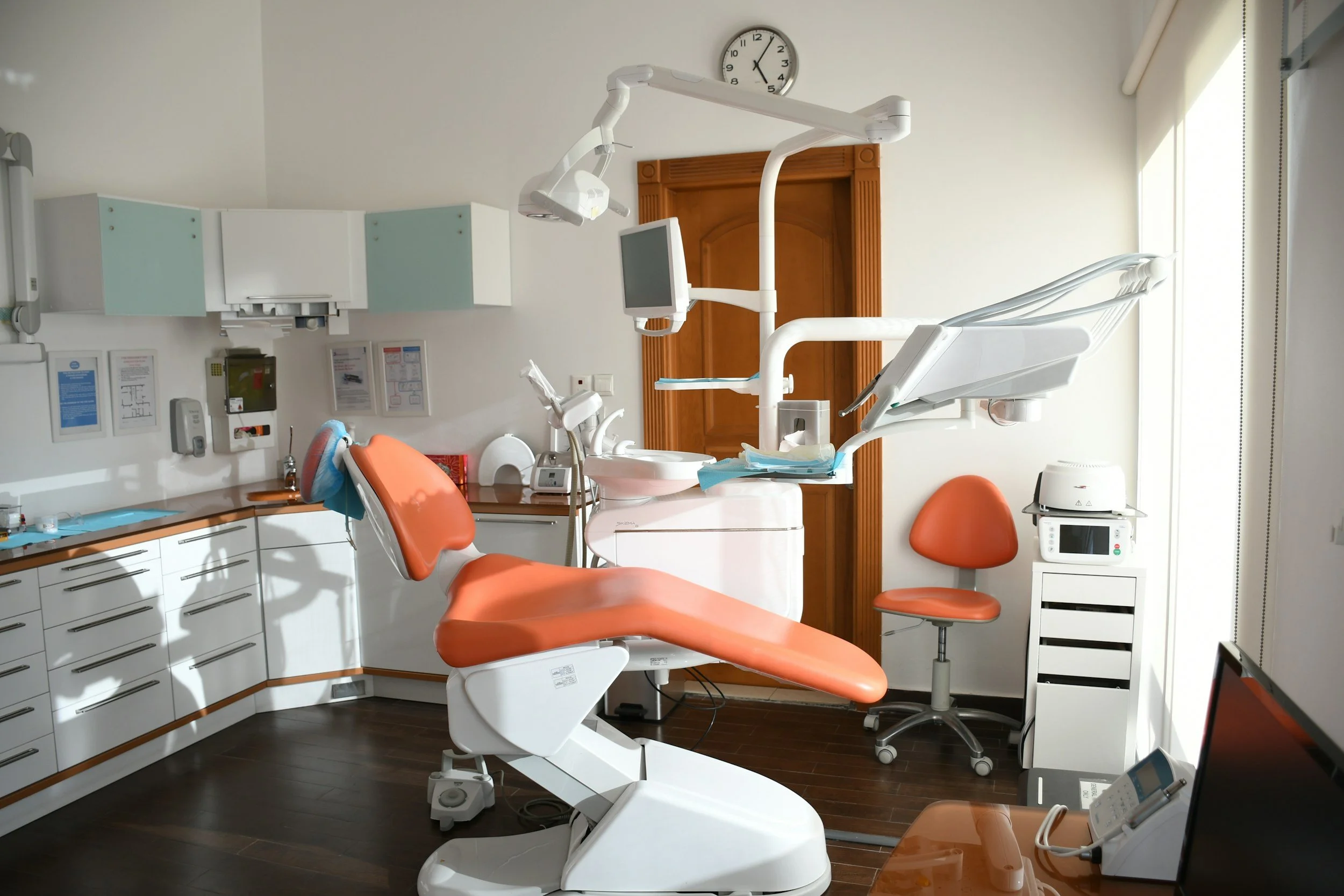
Business Attorney for Dentists and Dental Practices in North Carolina
Business Attorney for Dentists and Dental Practices in North Carolina
North Carolina has 6,241 active dentists as of the most recent NC Health Workforce data, up 33.3 percent from 4,681 in 2014, with dentist density reaching 5.68 per 10,000 residents (up from 4.74 a decade ago). Behind that growth is one of the most regulated industry verticals for business and succession planning in the South. NC regulates dental practice ownership and management through a combination of the NC Dental Practice Act at § 90-22 through § 90-48.16, the Professional Corporation Act at Chapter 55B and Professional Limited Liability Company provisions at Chapter 57D Article 2, NC State Board of Dental Examiners administrative rules at 21 NCAC Chapter 16, and in controlling NC appellate case law from Affordable Care, Inc. v. NC State Bd. of Dental Examiners, 153 N.C.App. 527, 571 S.E.2d 52 (2002). The standard NC LLC formation playbook does not apply to dental practices. North Carolina has specific licensing and certification requirements for dental entities. Those requirements are different from review of a management agreement: covered arrangements executed, modified, or renewed on or after July 7, 2026, do not require advance Dental Board review or approval.
The Walls Law Group has built a NC dental industry practice that addresses these legal requirements for NC dentist owners. We work with general practice dentists, oral surgeons, endodontists, periodontists, orthodontists, pediatric dentists, prosthodontists, and dental specialists across NC to handle the formation, partnership, succession, transaction, employment, and integrated estate planning work that NC dental practice ownership requires.
If you'd rather start with our practice scope generally, see our Business Planning practice page. This page covers what we specifically handle for NC dentist owners, the NC regulatory environment, and the planning architecture we use.
Free 25-minute discovery call
Tell us what you're working on (a new practice formation, a partnership accession, a DSO inquiry, a hospital or DSO employment offer, a succession question, an integrated estate plan refresh) and we will walk through your specific situation and whether we are the right firm for the engagement.
Why North Carolina dentists work with The Walls Law Group
Twenty years of NC business and estate practice
Jason Walls has been practicing NC business and estate planning law since August 2005, with the entirety of his practice focused on closely-held businesses and the families that own them. NC Bar #34274. 20+ years of NC-specific entity formation work means familiarity with NC Secretary of State filings, Chapter 55B Professional Corporation Act mechanics, Chapter 57D Professional Limited Liability Company provisions, and the NC State Board of Dental Examiners rules at 21 NCAC 16 that determine what is and is not permitted for NC dental practice ownership. NC dental practice law is not generic business law with a dental label on it. It is its own regulatory ecosystem, and the answers to ownership, succession, and sale questions are not the same as they are for a non-professional business.
Tax depth that high-income dental practices benefit from
Dental practice ownership generates the kind of pass-through income where federal and NC state tax structuring decisions move real money. S-corporation election for a NC dental PLLC, reasonable-compensation analysis for the dentist-owner, IRC § 199A qualified business income deduction qualification (dentistry is a Specified Service Trade or Business with income-phaseout rules under § 199A(d)(2), so structuring around the threshold matters), the One Big Beautiful Bill Act § 168(k) permanent 100% bonus depreciation for equipment placed in service after January 19, 2025, and the OBBBA $15M permanent estate tax exemption are all live planning issues for a NC dental practice owner generating $400K to $1.5M of practice income. We work these issues into the entity structure and the estate plan at the front end rather than trying to fix them on the back end of a sale or a death.
Integrated business and estate planning under one roof
Dentist owners need a practice entity, a buy-sell agreement, a will, a revocable trust, healthcare and financial powers of attorney, and a coordinated plan for what happens to the practice on death, disability, retirement, or sale. Most NC firms handle one practice area or another. We handle both, drafted together so they actually function as a system. A will or trust addressing a dental practice interest must be coordinated with the practice’s governing documents and professional ownership rules. A legally entitled recipient may temporarily hold a deceased professional-corporation shareholder’s shares under G.S. 55B-7(b). Under the default PLLC statute, the deceased member’s estate receives a special economic interest without automatically becoming a member. A buy-sell agreement may require a purchase or redemption, but that result depends on the agreement and applicable law.
How North Carolina regulates dental practice ownership
SHORT ANSWER: North Carolina regulates dental practice ownership and management through the Professional Corporation Act at Chapter 55B, the Professional Limited Liability Company provisions at Chapter 57D Article 2, the NC Dental Practice Act at Chapter 90 Article 2, NC State Board of Dental Examiners administrative rules at 21 NCAC Chapter 16, and controlling case law from Affordable Care, Inc. v. NC State Bd. of Dental Examiners, 153 N.C.App. 527, 571 S.E.2d 52 (2002). Per 21 NCAC 16F .0102, NCSBDE only certifies a professional dental entity when all proposed owners of shares or membership interests are licensed to practice dentistry in NC. The 1/3 non-licensee-employee allowance under N.C. Gen. Stat. § 55B-6 applies only to enumerated technical professions (architects, landscape architects, engineers and surveyors, geologists, and soil scientists), not to dentistry.
North Carolina restricts ownership and control of dental professional entities through its professional licensing laws. Dental management arrangements remain subject to requirements governing written terms, compensation, clinical authority, and patient records. The July 2026 change removed advance Board review for covered arrangements; it did not approve particular management fees or control provisions.
The three pillars of the dental Corporate Practice doctrine
NC's Corporate Practice of Dentistry doctrine is grounded in three sources: the statutory framework, the NCSBDE administrative rules, and controlling case law. The statutory framework is the NC Dental Practice Act at Chapter 90, Article 2 (§ 90-22 through § 90-48.16), combined with the Professional Corporation Act at Chapter 55B and the Professional Limited Liability Company provisions at Chapter 57D Article 2. The administrative rules are at 21 NCAC Chapter 16, with the management arrangements rule at 21 NCAC 16X .0101 being the most operationally important for transaction planning.
The controlling NC case is Affordable Care, Inc. v. NC State Bd. of Dental Examiners, 153 N.C.App. 527, 571 S.E.2d 52 (2002). The NC Court of Appeals upheld NCSBDE's authority to enforce the corporate practice of dentistry rules against constitutional and administrative challenges by Affordable Care and other dental management organization plaintiffs. The case remains good law and is regularly cited in NCSBDE enforcement actions and in dental MSO/DMC structure planning.
The 100% NC-licensed-dentist ownership rule
NC dental PCs and PLLCs are governed by the general Chapter 55B framework, with NCSBDE rules adding dental-specific requirements. The starting point is § 55B-6, which provides that a professional corporation "may issue shares of its capital stock only to a licensee as defined in G.S. 55B-2" and that "a shareholder may voluntarily transfer shares of stock issued to the shareholder only to another licensee." For dental, "licensee" means a dentist licensed by the NC State Board of Dental Examiners under N.C. Gen. Stat. § 55B-2(3) and Chapter 90 Article 2.
§ 55B-6 contains a narrow proviso allowing up to one-third non-licensee-employee ownership, but the statute expressly limits that proviso to professional corporations "rendering services as defined in Chapters 83A, 89A, 89C, 89E, and 89F" of the General Statutes. Those chapters cover architects, landscape architects, engineers and surveyors, geologists, and soil scientists. Dentistry, which is governed by Chapter 90 Article 2, is not included in that enumeration. The statute also contains a separate 49% allowance under § 55B-6(a1), but that allowance is expressly limited to professional corporations rendering services under Chapter 93 (Public Accountancy). Neither carve-out applies to dental practices.
NCSBDE has implemented the § 55B-6 "only to a licensee" rule for dental entities through 21 NCAC 16F .0102, which requires that the Board's certification for entity formation confirm that "all proposed owners of shares of stock in a professional corporation or association or all proposed managers and members of a professional limited liability company are licensed to practice dentistry in North Carolina," and through 21 NCAC 16F .0104, which separates "each shareholder or member" from "each dentist to be employed by the company" in the certificate of registration application. The Board's authority for these rules is grounded in § 55B-4, § 55B-6, and § 90-48.
For formation, the Board’s certification process addresses the proposed owners’ North Carolina dental licensure. When an existing dental professional entity proposes to issue or transfer shares or an ownership interest to another person, 21 NCAC 16F .0102(b) requires an application to certify the proposed acquirer’s dental licensure.
These requirements should not be confused with the separate rules following an owner’s death. G.S. 55B-7(b) permits temporary holding of a deceased professional-corporation shareholder’s shares by legally entitled recipients. A deceased PLLC member’s estate has statutory economic rights that do not automatically confer membership or clinical authority.
Management arrangements with DMCs and DSOs
For management arrangements executed, modified, or renewed on or after July 7, 2026, the parties may sign without Board preapproval, a compliance determination, or routine pre-execution review. The Board may review an agreement during an investigation arising from a valid complaint and retains enforcement authority.
The agreement must still meet the applicable written-agreement requirements. The restrictions in 21 NCAC 16X .0101(c)–(e) also remain relevant, including limits on management-company control or input over clinical practice, clinical personnel, patient records, and transfers of the professional entity’s ownership interests.
The rule restricts certain compensation formulas linked to profitability or gross or net revenues, subject to its stated exceptions. Review the complete agreement and actual operations against those provisions rather than treating every revenue-related arrangement as automatically permitted or prohibited.
Forming a NC dental PC or PLLC
SHORT ANSWER: Every NC dental practice entity goes through a two-step NCSBDE process around its NC Secretary of State filing. First, NCSBDE issues a Certification of Licensure confirming all proposed owners are NC-licensed dentists; that Certification is then attached to the Articles of Incorporation or Articles of Organization filed with the SOS. After the SOS filing is accepted, the entity submits the filed Articles, the Application for Certificate of Registration, and the $50 application fee to NCSBDE per 21 NCAC 16F .0104, and NCSBDE then issues the Certificate of Registration. The Certificate of Registration is what the entity must maintain and renew annually. Renewal fee is $25, late fee is $10, and failure to renew can result in suspension. NC dental PCs and PLLCs are exempt from the standard NC SOS annual report requirement under N.C. Gen. Stat. § 55-16-22(a2).
The NCSBDE pre-approval requirement
The single biggest operational difference between forming a NC dental PC or PLLC and forming a standard NC LLC is the NCSBDE pre-approval requirement. Per the NC State Board of Dental Examiners professional entity rules at 21 NCAC 16F, NCSBDE must certify the entity for compliance with Chapter 55B, Chapter 57D Article 2 (for PLLCs), the NC Dental Practice Act, and 21 NCAC Chapter 16 before any filing can be accepted by the NC Secretary of State. Filing with the SOS first (the way you would form a standard LLC) produces an entity that appears to exist but that is not authorized to practice dentistry in NC. Any dental services delivered through that entity constitute the unauthorized practice of dentistry under § 90-40. This is the most common pitfall for out-of-state dentists moving to NC who file based on the practices of their prior state.
The formation sequence
The standard NC dental PC or PLLC formation sequence is:
Step 1: Apply to NCSBDE for the Certification of Licensure. The application includes the proposed entity name, the names/addresses/NC dental license numbers of all proposed shareholders or members, and the names/addresses/occupations of corporate directors/officers or LLC managers. The Board uses this step to certify that all proposed owners are licensed to practice dentistry in NC.
Step 2: File Articles of Incorporation (for a PC) or Articles of Organization (for a PLLC) with the NC Secretary of State, with the NCSBDE Certification of Licensure attached as required documentation, and pay the SOS filing fee.
Step 3: After the SOS filing is accepted, submit to NCSBDE within the time required by 21 NCAC 16F: a copy of the filed Articles bearing the SOS certification of filing, the Application for Certificate of Registration on the form available on the Board's website, and the $50 application fee per 21 NCAC 16F .0104.Step 4: NCSBDE issues the Certificate of Registration. The entity is now both legally formed at the Secretary of State and certified to practice dentistry by NCSBDE. The EIN can be obtained, the operating agreement executed, the bank account opened, and the practice operationally launched.Annual renewal: NCSBDE Certificate of Registration must be renewed annually with a $25 renewal fee. Late fee is $10. Failure to renew can result in suspension of the entity's certification by the Board, which can in turn affect the entity's status with the NC Secretary of State.
Fees and ongoing obligations
Note that NC dental PCs and PLLCs are exempt from the NC Secretary of State annual report requirement under N.C. Gen. Stat. § 55-16-22(a2). The annual obligation that does apply is the NCSBDE Certificate of Registration renewal. This is a frequent miss for dentist owners accustomed to the April 15 annual report deadline that applies to standard NC LLCs and business corporations.
| NCSBDE Filing or Service | Fee | Frequency |
|---|---|---|
| Initial application for Certificate of Registration | $50 | One-time |
| Annual Certificate of Registration renewal | $25 | Annual |
| Late renewal penalty | $10 | Per occurrence |
An existing dental professional entity proposing to issue or transfer shares or an ownership interest to another person must follow the certification-application requirements in 21 NCAC 16F .0102(b). Identify the proposed acquirer and the interest being transferred. A redemption, inheritance, asset sale, or DSO transaction should be evaluated according to its actual structure rather than treated as the same type of ownership transfer.
What we handle for NC dentist owners
Our work for NC dentist owners falls into four buckets that map to the moments in a dentist's career when business and estate planning legal questions cluster.
Entity formation and practice startup
NCSBDE-pre-approved PC or PLLC formation, operating agreement or shareholder agreement drafted with dental-specific provisions (mandatory divestiture on loss of licensure, death-related transfer or redemption provisions tailored to the entity and its governing documents, NCSBDE pre-certification language for adding owners, buy-sell triggers and valuation methodology), multi-entity structuring separating the dental practice entity from a real-estate-holding LLC, S-corporation election analysis under IRC § 1362, EIN setup, and a launch-ready package that gets a new practice operationally functional from day one.
Partnership, succession, and buy-sell architecture
Partnership accession agreements for associate dentists being admitted to ownership in an existing practice, multi-dentist group operating agreements with weighted voting and economic-sharing provisions calibrated to seniority and contribution, buy-sell agreements with mandatory and optional triggers (death, disability, loss of NCSBDE licensure, voluntary departure, retirement, divorce), valuation methodology defined in the agreement, life insurance funding for death-trigger redemption obligations, and coordination of the buy-sell with the dentist owners' personal estate plans so the documents work as a system rather than against each other.
DSO transactions, DMC arrangements, and consolidation
Pre-LOI position preparation for dentist owners contemplating a DSO transaction, Management Services Agreement review and negotiation for friendly-PC arrangements with NC-specific 21 NCAC 16X scrutiny in mind, rollover equity terms (vesting, anti-dilution, tag-along, drag-along, put rights), dentist employment and restrictive covenant terms, tax structure analysis (asset sale versus stock sale, IRC § 338(h)(10) election where applicable, qualified small business stock treatment under IRC § 1202 where applicable), and the post-closing operational and clinical control terms that determine whether the dentist owners can actually practice in the post-closing environment for the full transition period.
Asset protection and integrated estate planning
Personal estate plans (will, revocable living trust, healthcare power of attorney under N.C. Gen. Stat. Chapter 32A, durable financial power of attorney under Chapter 32C) coordinated with the practice entity and buy-sell architecture, multi-entity asset protection separating the practice from real estate and non-practice investments, charging order protection under § 57D-5-03, irrevocable trust structures, federal estate tax planning with the 2026 $15 million per-individual exemption (made permanent under the One, Big, Beautiful Bill Act), and integration that makes sure the will or trust does not conflict with the buy-sell agreement’s actual purchase, redemption, and succession terms.
Where is your practice in its lifecycle? Whether you're forming a new NC dental practice, accessing a partner, evaluating a DSO inquiry, or thinking about the next 10 years, the first conversation is free.
Schedule your discovery call → Or call 919-647-9599
Private equity, DSO consolidation, and the NC dental market
Dentistry is the most active healthcare vertical for private equity consolidation in the United States. Approximately 130 PE-backed DSOs operate across the dental services landscape as of mid-2025, per the FOCUS Investment Banking 2025 dental transactions update, more than in any other healthcare vertical. The Private Equity Stakeholder Project's 2024 healthcare M&A report identified 137 add-on acquisitions, 6 buyouts, and 18 growth/expansion investments in dental care in 2024, with seven of the 13 most active PE-backed platform companies in healthcare being dental care companies.
A Health Affairs study on dental PE found that PE affiliation with dental practices nearly doubled between 2015 and 2021, from 6.6 percent to 12.8 percent. Specialty dental practices have seen the highest PE consolidation rates, with endodontists and oral surgeons more than doubling their PE affiliation during the period.
The NC DSO landscape
NC-anchored DSOs include Riccobene Associates Family Dentistry (headquartered in Cary NC, acquired by Comvest Private Equity in November 2024, operating 62 clinics across NC, SC, and VA), Flagship Specialty Partners (headquartered in Charlotte NC, oral and facial surgery focus, 50 locations across NC, SC, VA, and FL after the July 2025 Florida expansion), and Oakpoint (headquartered in Raleigh NC, founded 2019, operating in NC and SC). National platforms with NC presence include MB2 Dental Solutions, Heartland Dental, and Aspen Group.
The mid-sized regional DSOs are typically the most relevant counterparties for NC dentist owners considering DSO transactions, because their management arrangements have been drafted with 21 NCAC 16X in mind. National platforms typically use template management agreements that must be modified for NC-specific requirements. Either way, the MSA terms and the operating reality of the post-closing relationship determine whether the structure complies with NC's Corporate Practice of Dentistry framework.
Why timing matters
I want to strongly encourage you to engage counsel well before any active DSO transaction negotiation. Dentist owners contemplating a DSO transaction benefit from engaging counsel 12-18 months before negotiation begins. The pre-negotiation period is when the practice's financial reporting, real estate structure, operating agreement, employment contracts, and compliance documentation can be cleaned up to maximize the practice's negotiating position. Practices that engage counsel only after receiving an LOI typically have less negotiating room than practices that have prepared in advance.
Patient-care and reputational considerations
PE-backed dental DSOs have generated significant patient-care scrutiny in recent years. In November 2024, KFF and CBS News published a joint expose detailing how multiple PE-owned dental care chains may be contributing to a growing trend of dentists performing unnecessary extractions to drive implant procedure revenue. The KFF/CBS reporting cited examples of PE-backed DSOs using non-clinical sales personnel to meet with patients about implant options before clinical examination.
For NC dentist owners contemplating a DSO transaction, the patient-care concern is a material consideration in the structure negotiation: who controls treatment planning, how clinical autonomy is preserved in the MSA, how clinician compensation is structured (or not structured) around procedure volume or revenue, and what happens to the practice's reputation in the local community after the transaction. The legal architecture and the operational reality both matter, and they have to align.
Common questions from NC dentist owners
-
No. A NC dental PLLC requires advance approval by the NC State Board of Dental Examiners and a different documentation sequence than the standard NC LLC formation process. The standard process (file Articles of Organization with NC SOS, pay the filing fee, the LLC exists) does not apply to dental practices. Dental services delivered through an entity that lacks NCSBDE certification constitute the unauthorized practice of dentistry under N.C. Gen. Stat. § 90-40. The correct sequence is: apply to NCSBDE for the Certification of Licensure confirming all proposed owners are NC-licensed dentists; attach that Certification to the Articles of Organization or Articles of Incorporation filed with the NC SOS; then after the SOS filing is accepted, submit the filed Articles, the Application for Certificate of Registration, and the $50 application fee per 21 NCAC 16F .0104 to NCSBDE, which then issues the Certificate of Registration.
-
No. Under N.C. Gen. Stat. § 55B-6 and 21 NCAC 16F .0102, all owners of a NC dental PC or PLLC must be licensed to practice dentistry in NC. The 1/3 non-licensee-employee allowance in § 55B-6 applies only to enumerated technical professions (architects, landscape architects, engineers and surveyors, geologists, and soil scientists) and does not apply to dentistry. A non-dentist spouse cannot be a shareholder, member, or any other form of equity owner in a NC dental practice, regardless of employment status with the practice. The practical implication is that the dentist's spouse cannot acquire equity in the practice through marital property division on divorce (the buy-sell agreement should require mandatory redemption to the dentist owner with the spouse receiving only the proceeds), through bequest under a will or trust (the buy-sell should require mandatory redemption on death with the spouse receiving only the proceeds), or through any other transfer. The dentist's spouse can of course be a salaried employee of the practice in a non-clinical role (practice manager, office manager, business administrator), but cannot hold equity.
-
Yes, in important ways. The NC dental rule under 21 NCAC 16F .0102 requires that all owners of a NC dental PC or PLLC be NC-licensed dentists. The NC physician rule under Chapter 55B and the NC Medical Board rules requires 100% licensee ownership for physician PCs and at least 2/3 licensee ownership for physician PLLCs. NC physician entities also have specific enumerated cross-licensee combinations (physician with PA, physician with NP, physician with psychologist, and others under § 55B-14(c)). NC dental practices have no equivalent cross-licensee permission and no non-licensee allowance. The result is that NC dental practices have a tighter ownership rule than NC physician PLLCs, which has implications for partnership structures, key-employee equity programs (which are not available on the dental side), and DSO transaction architecture. The DSO/friendly-PC structure is the standard NC workaround, with the dentist owners retaining 100% of the dental practice entity and the DSO providing non-clinical services under a Management Services Agreement subject to 21 NCAC 16X .0101.
-
For most NC dental practices, yes. The math is pretty simple. Once practice net income clears the reasonable-compensation threshold for the dentist's role (typically $200,000-$400,000 depending on specialty and market), additional income above the reasonable-compensation threshold can be taken as a pass-through distribution that is not subject to FICA, Medicare, or self-employment tax. For a NC dentist owner with $800,000 in annual practice net income, taking $300,000 as reasonable W-2 compensation and $500,000 as S-corp distribution produces approximately $14,500 in annual SE/FICA/Medicare savings versus operating as a sole proprietorship. Over a 20-year career, the nominal savings approach $300,000. The trade-offs (reasonable compensation analysis, payroll tax compliance, and limits on certain pass-through tax planning techniques) almost always favor the S-corp election for high-income dental practice owners.
-
The deceased dentist's equity cannot continue to be held by the estate or the heirs unless an heir is also a NCSBDE-licensed dentist. Per 21 NCAC 16F .0102, all owners of a NC dental PC or PLLC must be licensed to practice dentistry in NC, and the rule applies to transfers by bequest, inheritance, or any other mechanism. The buy-sell agreement should specify automatic redemption of the deceased dentist's equity at a defined valuation, with life insurance funding the redemption obligation. The redemption proceeds flow through the dentist's estate to the spouse or other beneficiaries under the will or trust. The integrated estate plan should be coordinated so that the personal estate documents do not include provisions that conflict with the buy-sell's mandatory-redemption mechanics. The most consequential error we see is a will that includes a specific bequest of the practice interest to a non-dentist spouse, when the buy-sell agreement requires the equity to be redeemed and the spouse to receive only the proceeds.
-
The federal estate and gift tax exemption for 2026 is $15 million per individual and $30 million per married couple with portability, per IRS announcement. The exemption was made permanent under the One, Big, Beautiful Bill Act and is inflation-adjusted in future years rather than sunsetting. For high-net-worth NC dentist owners, the permanent exemption changes the planning calculus from the prior pre-sunset urgency to optimal use of lifetime gifting, irrevocable trust structures (spousal lifetime access trusts, GRATs, valuation-discount trusts), and integration with the practice succession plan. NC has no state-level estate tax (repealed effective 2013), so NC dentists face only the federal exposure.
-
The DSO/friendly-PC model is the dominant architecture for PE-backed dental deals. The dental practice is structured as a dentist-owned PC or PLLC (the friendly PC), and a separately-owned Dental Service Organization (the DSO, typically owned by the PE firm) provides non-clinical services (billing, IT, HR, real estate, marketing, equipment financing) to the practice under a Management Services Agreement. The dentist PC retains responsibility for clinical decisions, hiring of clinical staff, medical records, and the NCSBDE-interface. The structure can be used in NC but is subject to 21 NCAC 16X scrutiny: the DSO cannot have control over clinical decisions or hiring/firing of clinical personnel, the management fee cannot be tied to practice revenue or designed to capture excess profits, and the operating reality of the post-closing relationship must align with the legal architecture. Affordable Care, Inc. v. NC State Bd. of Dental Examiners, 571 S.E.2d 52 (N.C. App. 2002), is the controlling NC case on the corporate practice of dentistry framework.
Working with The Walls Law Group from anywhere in North Carolina
We work with dentist owners statewide from our Raleigh office at 5511 Capital Center Drive, Suite 180, and our Pittsboro office at 44 Hillsboro Street, Suite D, through phone, video, electronic document workflows, and in-person meetings when preferred. For Triangle dentist owners, our county hubs cover the local filing infrastructure and business context:
Wake County (Raleigh, Cary, Apex, Holly Springs, and surrounding municipalities)
Johnston County (Clayton, Smithfield, Selma, Benson)
Chatham County (Pittsboro, Siler City, Goldston, Chatham Park)
Durham County (Durham, Research Triangle Park)
Orange County (Chapel Hill, Carrboro, Hillsborough)


Ready to talk?
If we can be of assistance to you, please reach out at 919-647-9599. Free 25-minute discovery call. We will walk through your specific situation (formation, succession, DSO inquiry, employment evaluation, estate plan refresh) and whether we are the right firm for the engagement.
Authoritative sources referenced on this page
This page draws on the following primary sources for NC dental practice ownership, regulation, and consolidation. Practice owners contemplating specific transactions should review the primary sources directly or consult with qualified NC dental counsel.
NC statutes
Chapter 55B (Professional Corporation Act). The general statutory framework for NC professional corporations including dental PCs
§ 55B-6 (Capital stock). The provision establishing the lay-ownership prohibition for NC professional corporations
§ 55B-4 (Types of professional services). The provision governing the formation of professional corporations and the licensee composition of officers, directors, and shareholders
Chapter 57D Article 2 (Professional Limited Liability Companies). The PLLC equivalent of Chapter 55B
Chapter 90 Article 2 (NC Dental Practice Act). The NC statute governing the practice of dentistry, including § 90-29 (definition of practice of dentistry), § 90-40 (unauthorized practice prohibition), § 90-40.1 (injunctive relief), and § 90-48 (NCSBDE rulemaking authority)
§ 55-16-22(a2). The statutory basis for the PC/PLLC exemption from the standard NC SOS annual report requirement
NCSBDE rules and resources
NC State Board of Dental Examiners. The regulatory body for NC dentists, dental hygienists, and dental professional entities
21 NCAC Chapter 16 (NCSBDE administrative rules). The NCSBDE administrative rules including dental licensure, professional entity formation (Subchapter 16F), and management arrangements (Subchapter 16X)
21 NCAC 16F .0102 (Application for Certification of Licensure). The NCSBDE rule requiring that all proposed owners of a NC dental PC or PLLC be licensed to practice dentistry in NC
21 NCAC 16X .0101 (Management Arrangements rule). The NCSBDE rule governing management arrangements between dental practices and dental management companies
NC case law
Affordable Care, Inc. v. NC State Bd. of Dental Examiners, 153 N.C.App. 527, 571 S.E.2d 52 (2002). The NC Court of Appeals decision upholding NCSBDE's authority to enforce rules preventing the corporate practice of dentistry, against constitutional and administrative challenges by dental management organization plaintiffs.
Federal authorities
Stark Law (42 USC § 1395nn). The federal physician self-referral prohibition that applies to certain dental services billed to Medicare
Anti-Kickback Statute (42 USC § 1320a-7b). The federal anti-kickback prohibition applicable to dental services involving federal healthcare program payments
HIPAA Privacy Rule (45 CFR Part 164). The federal patient privacy framework applicable to NC dental practices as covered entities
IRS 2026 estate tax inflation adjustment announcement. The official IRS announcement of the 2026 federal estate and gift tax exemption ($15 million per individual, made permanent under OBBBA)
Workforce and market data
NC Health Workforce HPDS Update 2024. The NC Health Professions Data System annual report from the Cecil G. Sheps Center for Health Services Research, UNC Chapel Hill, containing NC dentist workforce statistics
Trends in NC's Oral Health Workforce. Lombardi, Moore, Simons, Sullivan, Galloway, and Fraher (NC Medical Journal 2024;85(6):380-388), the most recent peer-reviewed analysis of the NC dental workforce
Private Equity Stakeholder Project healthcare M&A reports. PESP's ongoing tracking of PE-backed dental acquisitions and DSO consolidation activity
FOCUS 2025 Dental Transactions Update. FOCUS Investment Banking's annual analysis of the dental DSO transaction market
Related pages on this website
Business Planning (practice area). The Walls Law Group business planning practice generally
Business Attorney for Physicians and Medical Practices in North Carolina. The parallel industry vertical page covering NC physician practice ownership and succession
Estate Planning (practice area). The Walls Law Group estate planning practice generally
Jason Walls, JD. Jason Walls' full biography and practice profile
Disclaimer: This page is for general informational purposes and is not legal advice. NC trades business succession planning depends on the specific facts of each business including trade classification, license status, ownership structure, business value, and family composition. The information on this page is current as of the last reviewed date and may not reflect subsequent statutory, regulatory, or case law changes. To obtain advice for your trades business, please contact The Walls Law Group at (919) 647-9599 or schedule a consultation through wallslawnc.com.