

Business Attorney for NC Electrical Contractors
By R. Jason Walls | The Walls Law Group | Raleigh and Pittsboro, North Carolina
20+ years practicing business and estate planning law in North Carolina
North Carolina Bar #34274 | Admitted August 25, 2005
Last reviewed: May 17, 2026
Part of: Business Attorney for NC Contractors and Trades Businesses → NC Electrical Contractors
What we do for NC electrical contractors
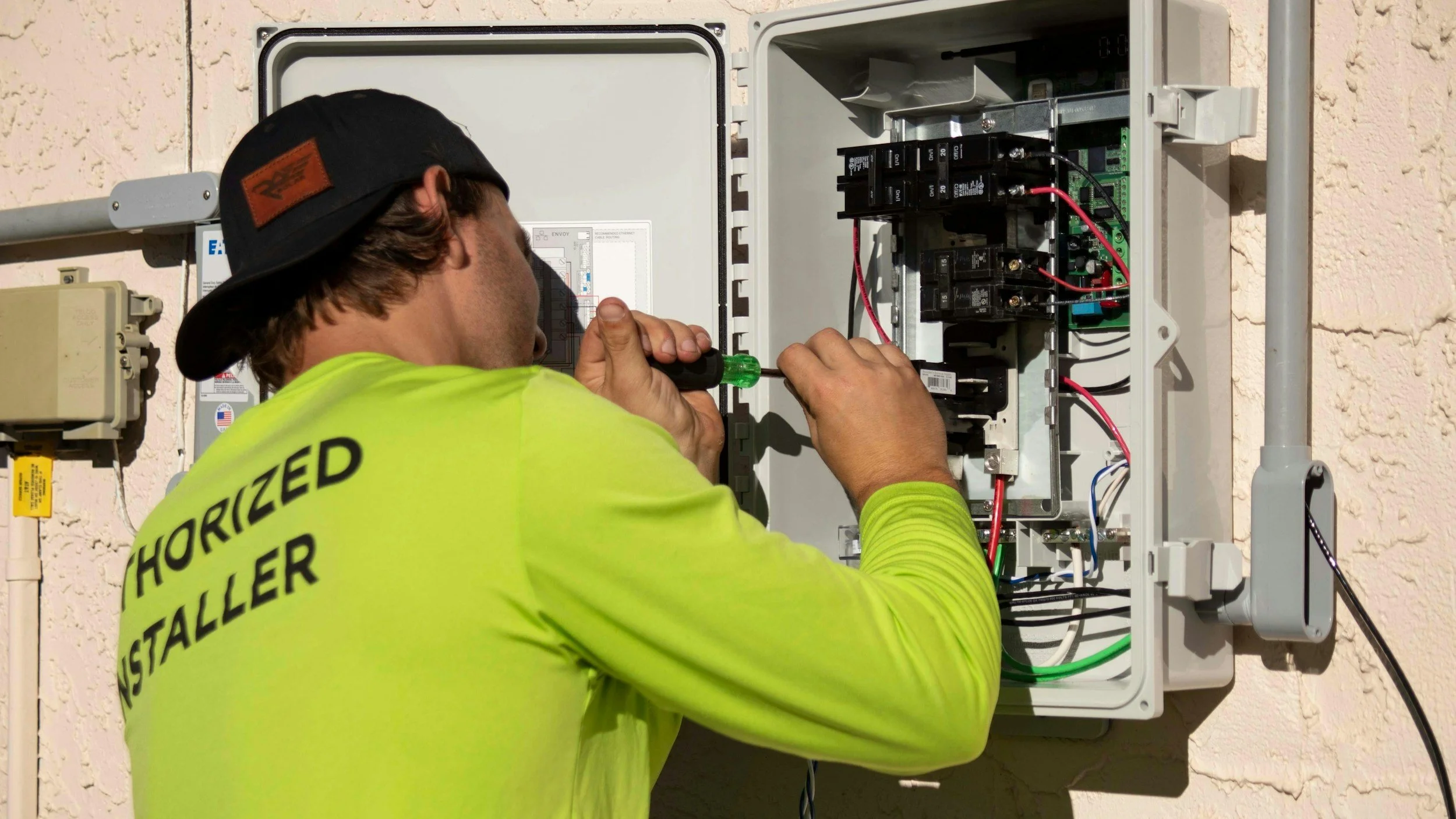
SHORT ANSWER: The Walls Law Group provides integrated business and estate planning for NC electrical contractors. The work centers on three things: solving the NC qualifier-succession problem under NCBEEC and § 87-43.2's immediate-cancellation rule, drafting buy-sell agreements that account for electrical-specific triggers (qualifier loss, license continuity, service-contract valuation, Chapter 44A lien exposure, multi-trade coordination, surety consent), and coordinating business succession with personal estate planning so owners exit on their terms whether to family, employees, or a private equity acquirer.
NC electrical contractors operate under a license-continuity framework that, in our experience, presents some of the most time-sensitive succession exposures in the NC trades. The NCBEEC licensing framework distinguishes three financial tiers (Unlimited, Intermediate, Limited) plus the SP-SFD single-family-detached-dwelling classification and six Special Restricted classifications, and the listed-qualifier rule at § 87-43.2 causes immediate cancellation of an electrical contractor license if at any time no listed qualified individual is regularly employed by the licensee. By comparison, the general contractor rule at § 87-10(c1) provides a 90-day grace period for a qualifier departure. Let me be very clear with you on why this matters for the planning: a NC electrical contractor with succession risk in mind needs to maintain depth of listed qualified individuals on every license, because the loss of the last listed qualified individual stops the business from bidding new work the moment it happens, and the buy-sell, the operating agreement, the estate documents, and the NCBEEC paperwork all need to work as one coordinated system or the business cannot continue operating through a founder transition.
The NC electrical licensing framework
NC electrical contracting is regulated under N.C. Gen. Stat. Chapter 87 Article 4 by the NC State Board of Examiners of Electrical Contractors (NCBEEC)with implementing rules at 21 NCAC Chapter 18B. The Board issues licenses in three financial classifications (Unlimited, Intermediate up to $150,000 per project, Limited up to $60,000 per project), a Single-Family Detached Dwelling (SP-SFD) restricted scope, and six Special Restricted classifications under Section .0800 (fire alarm/low voltage, elevator, plumbing/heating/AC, groundwater pump, electric sign, swimming pool). Most NC electrical contractors with commercial or industrial work hold an Unlimited license. Every license requires a Board-listed qualified individual; the point that matters for succession is what happens when that person leaves.
The listed-qualifier rule and immediate cancellation
The single most consequential succession rule for any NC electrical contractor is N.C. Gen. Stat. § 87-43.2. The statute creates an immediate-cancellation mechanic that operates differently than the plumbing and general-contractor frameworks, which use their own continuity and successor rules, and quite candidly, the lack of a grace period is what makes NC electrical succession planning structurally distinct from the other major trade boards. NC plumbing has the narrow successor rule at § 87-21(b1) that limits license number assignment to a 10-year employee or specific family-and-in-law categories. NC general contractors have the 90-day grace period at § 87-10(c1). NC electrical has neither buffer; the license is cancelled the moment no listed qualified individual is regularly employed by the licensee.
The statute imposes four interlocking requirements on every NC electrical contractor:
At least one listed qualified individual must be regularly employed by the applicant at each separate place of business to have the specific duty and authority to supervise and direct electrical contracting done by or in the name of the licensee. (§ 87-43.2(a)(1))
The applicant must agree in writing to report to the Board within 5 days any additions to or loss of the employment of listed qualified individuals. (§ 87-43.2(a)(3))
A license is cancelled if at any time no listed qualified individual is regularly employed by the applicant.(§ 87-43.2(b))
Work begun prior to cancellation may be completed under such conditions as the Board shall direct, but no new work requiring a license may be bid for, contracted for, or initiated after cancellation until the license is reinstated. (§ 87-43.2(b))
What § 87-43.2 means for PE exits and succession planning
The NCBEEC 5-day notification rule and immediate-cancellation risk make qualifier continuity the central deal issue in any NC electrical contractor sale. A private equity buyer acquiring a NC electrical platform cannot afford a gap in the listed qualifier, because if no qualifier remains connected to the entity the license is subject to immediate cancellation rather than a grace period. Practical PE-exit structuring for an electrical contractor requires identifying and pre-qualifying a successor qualifier well before close, drafting the purchase agreement so the seller's qualifier remains connected through a defined transition window, and coordinating the NCBEEC notification timeline so the entity's licensed authority never lapses during the handoff.
Multi-trade businesses: cross-license coordination
Many NC electrical contractors also hold one or more Heating Group classifications under SBPHFSC or a general contractor license under NCLBGC. Each board has its own continuity mechanic. NCBEEC under § 87-43.2 causes immediate loss of lawful operating authority when no listed qualified individual remains. SBPHFSC under § 87-21 has continuity rules plus the § 87-21(b1) narrow successor restriction for plumbing license-number assignment. NCLBGC under § 87-10(c1) provides the 90-day grace period with the immediate bid moratorium. A single qualifier departure can trigger different consequences under each board simultaneously, so the buy-sell agreement and operating agreement need separate qualifier identification and replacement protocols for each license category.
The data center demand environment and electrical contractor valuation
The NC data center buildout is shaping electrical M&A. According to reporting from WUNC and WFAE citing EPRI analysis, NC hosts on the order of 100 data centers, with low-single-digit percent of statewide load and US data center demand projected to more than double by 2030. Specific NC projects include Microsoft's three Catawba County campuses (per Aterio analysis reported by Construction Owners, hundreds of megawatts of projected combined capacity), Digital Realty's 156-acre Charlotte campus(up to 400 MW, rezoned May 2025), and the AWS Richmond County hyperscale campus(ground broken October 31, 2025). I want to strongly encourage you to think about your business's exposure to this demand cycle as a separate valuation factor in any succession or sale conversation. Recent NC electrical M&A includes:
Comfort Systems USA (NYSE: FIX), the publicly traded MEP consolidator with both Electrical and Mechanical segments, acquired Greensboro-based Starr Electric Company in February 2020 at projected $90-$100 million annualized revenue, and on October 1, 2025 added Feyen Zylstra (Grand Rapids MI) and Meisner Electric (Boca Raton FL) into its Electrical segment for combined $200-$240 million annualized revenue. The same parent also acquired Matthews NC-based Century Contractors on January 1, 2025 for $84.2 million (publicly disclosed in the company's 10-Q), though Century operates in the company's Mechanical segment rather than Electrical.
Wilson NC-based Watson Electrical Construction Co. LLC, founded 1935, divested its Traffic Signal division to Crest Rock Partners-backed Lumin8 Transportation Technologies on November 7, 2023. The Watson transaction illustrates the divisional-divestiture model available to NC electrical contractors with multiple service lines.
Pike Corporation (Mount Airy NC, founded 1945 by Floyd S. Pike, utility-focused electrical contractor) was taken private by Court Square Capital Partners in partnership with chairman and CEO J. Eric Pike in a transaction that closed December 22, 2014. Pike's customer base, per the company's own announcement materials at the time of the transaction, included over 300 investor-owned, municipal, and cooperative utilities.
Bain Capital and Mubadala Investment Company acquired Charlotte-headquartered Service Logic (commercial HVAC and building automation services platform, 140-plus locations, 5,000-plus technicians) from Leonard Green & Partners on December 16, 2025, adding significant national capital to the Charlotte-anchored MEP consolidation cycle.
Additional active NC-bidder set spans publicly traded consolidators (IES Holdings, MYR Group, EMCOR Group, APi Group), national PE platforms (Bernhard Capital Partners, Wynnchurch Capital, Sila Services backed by Morgan Stanley Capital Partners), and Southeast regional rollups including ICS Holding (Stellex Capital), ArchKey Solutions, and Norlee Group (Heartwood Partners).
What we handle for NC electrical contractors
Generic small-business legal counsel rarely produces deliverables that account for § 87-43.2 immediate-cancellation contingency planning, listed-qualifier depth management, the pending NCBEEC bona-fide employee rule amendments to 21 NCAC 18B § .0306 (effective July 1, 2026 per the Board's published notice), multi-classification qualifier coordination, the data center demand environment's valuation implications, PE exit tax planning, and electrical-specific buy-sell architecture that NC electrical contractors actually need. The Walls Law Group's electrical practice is built around the integrated drafting principle, with deliverables scoped to the size and complexity of each business:
Operating agreement with electrical-specific provisions. Qualifier identification for each license classification held (Unlimited, Intermediate, Limited, SP-SFD, plus Special Restricted classifications when applicable), replacement-qualifier protocol, listed-qualifier-loss-trigger provisions aligned with the pending NCBEEC bona-fide employee rule amendments to 21 NCAC 18B § .0306 (effective July 1, 2026 per the Board's published notice), multi-classification operating arrangements, and full buy-sell architecture coordinated with personal estate documents.
Funded buy-sell agreement. Life insurance funding for death-trigger redemption, disability insurance funding for disability-trigger redemption, valuation methodology calibrated to the trade and to current PE-consolidation market dynamics (with separate treatment of service-contract recurring revenue and data-center-adjacent capability premiums), qualifier-loss and license-cancellation triggers, Chapter 44A lien-aware indemnification, and surety/lender consent provisions.
Multi-entity restructuring. For electrical contractors above approximately $5-$10 million in revenue, separation of operating, real estate, equipment, and holding entities to provide asset protection, succession flexibility, divisional-divestiture flexibility (in the Watson Electrical model), and tax planning opportunities. Structure typically uses LLCs under Chapter 57D with S-corp tax elections.
Personal estate documents. Will, revocable living trust, healthcare power of attorney under NC Chapter 32A, durable financial power of attorney under NC Chapter 32C, all coordinated with the business documents.
Specialty trusts as needed. ILIT for life insurance, GRAT or IDGT for equity transfer at pre-PE-exit valuations, dynasty trust for multi-generational planning, and qualified subchapter S trust (QSST) or electing small business trust (ESBT) for trusts holding S-corp equity.
PE transaction counsel. For owners actively engaged in PE transaction discussions: letter-of-intent terms, purchase agreement representations and warranties, IRC § 1202 QSBS analysis, § 105-154.1 NC PTE election interaction with the transaction, rollover equity structure under IRC § 351, employment and non-compete terms, earnout structure, qualifier transition agreement, and post-closing equity governance.
Free 25-minute discovery call
Tell us what you're working on (a new practice formation, a partnership accession, a DSO inquiry, a hospital or DSO employment offer, a succession question, an integrated estate plan refresh) and we will walk through your specific situation and whether we are the right firm for the engagement.
Why the integrated approach matters for electrical contractors
The single most consequential failure mode we see in NC electrical contractor succession is the buy-sell agreement that conflicts with the will or trust, drafted by different attorneys at different times, never reconciled, never tested until the founding qualifier dies, becomes incapacitated, or retires. With electrical, the timing problem is sharper than in plumbing or general contracting because § 87-43.2 immediately cancels the license when no listed qualified individual remains, rather than providing a 90-day buffer. By the time the conflict surfaces, the family is already in probate litigation with each other, the license is already cancelled or weeks from cancellation, and the customer base is starting to look at competitors. That outcome is preventable, but only if the business and personal documents are drafted as a coordinated system from the start.
The integrated approach addresses business and estate planning together. The operating agreement, buy-sell agreement, personal will, revocable living trust, life insurance ownership and beneficiary designations, specialty trusts, and tax structure are all designed to coordinate with each other. The qualifier-succession protocol in the operating agreement aligns with the buy-sell death-trigger mechanics, which align with the personal estate documents, which align with the funding mechanism through life insurance. If you are working with separate attorneys on your operating agreement, your buy-sell, and your personal estate plan, the documents are most effective when those attorneys coordinate directly on the integration points, or when all the drafting is moved to a single attorney who can hold the full picture.
Common questions about NC electrical contractor business succession
-
Description text goes hereUnder N.C. Gen. Stat. § 87-43.2(b), a NC electrical contractor license is cancelled if at any time there is no listed qualified individual regularly employed by the licensee. The Board provides a 5-day notification window for the licensee to notify NCBEEC of the loss. The license cannot bid new work; the licensee may finish projects under contract on the date of qualifier loss, subject to Board direction. There is no equivalent to the GC 90-day grace period.
-
Set by NCBEEC under 21 NCAC 18B and N.C. Gen. Stat. § 87-43.4: Unlimited authorizes any electrical project regardless of value; Intermediate authorizes single projects up to $150,000; Limited authorizes single projects up to $60,000 and on which equipment or voltage does not exceed 600 volts. SP-SFD (Single-Family Detached Dwelling) restricts scope to single-family residential electrical work. Six Special Restricted classifications exist under Section .0800 for specific narrow scopes (fire alarm/low voltage, elevator, etc.).
-
No. The 90-day rule at N.C. Gen. Stat. § 87-10(c1) applies to general contractor licenses issued by the NC Licensing Board for General Contractors. Electrical contractor licenses are governed by NCBEEC under Chapter 87 Article 4. The electrical-specific continuity mechanic at § 87-43.2(b) causes immediate cancellation when no listed qualified individual remains regularly employed by the licensee, with no statutory grace period. A NC electrical contractor needs to plan license continuity under the NCBEEC framework, not by analogy to the GC rule.
-
Yes. NC electrical has no narrow successor rule equivalent to § 87-21(b1) for plumbing, so successor qualifiers become eligible by passing the NCBEEC examination and being listed with the Board. The PE buyer must coordinate the qualifier transition through closing because § 87-43.2(b) cancels the license immediately when no listed qualified individual remains. Bonding capacity continuity, surety company consent, and lender consent are also typically required.
-
Not separate documents, but the single buy-sell needs trade-specific provisions for each license category the business holds. If the business holds an Unlimited electrical license under NCBEEC and a Heating Group license under SBPHFSC, the buy-sell should address § 87-43.2 immediate-cancellation triggers and the SBPHFSC continuity mechanics separately. If the business also holds a Building or Residential contractor license under NCLBGC, the additional 90-day grace-period mechanic under § 87-10(c1) should be addressed. Three boards, three rules, three separate provisions in a single coordinated buy-sell.
-
As practitioner commentary rather than a published market index: NC electrical contractors with sustained EBITDA above approximately $2-3 million currently price in a 5x-8x EBITDA range, with premium adjustments for data center, hyperscale, or mission-critical construction capability. Commercial service-and-maintenance heavy businesses tend to command higher multiples than installation-heavy businesses. These are observations from the deals we have seen, not published indices. A buy-sell should specify methodology in advance, typically a multiple of trailing EBITDA with separate treatment of equipment and real estate.
-
An integrated plan typically includes an updated LLC operating agreement with qualifier identification for each license classification held, replacement-qualifier protocol calibrated to the no-grace-period mechanic, and multi-classification coordination; a funded buy-sell agreement with electrical-specific triggers (qualifier-loss, license-discipline, bonding-capacity loss, NCBEEC notification timing); personal estate documents coordinated with the business documents; and specialty trusts as appropriate.
Working with The Walls Law Group from anywhere in North Carolina
The Walls Law Group serves NC electrical contractor business owners statewide from offices in Raleigh and Pittsboro. The electrical practice handles matters across the Triangle (Wake County, Durham County, Orange County, Chatham County, and Johnston County), the Triad, Charlotte metro, the western NC data center corridor (Catawba, Caldwell, Rutherford, Burke counties), the NC coast, the mountain region, and rural NC counties. Most engagements are conducted by phone, video conference, and document-sharing platforms supplemented by in-person meetings as needed.
Call to discuss your electrical contractor succession plan


Ready to talk?
If we can be of assistance to you, please reach out at 919-647-9599. Free 25-minute discovery call. We will walk through your specific situation (business formation, licensing compliance, contractor agreements, employee vs. subcontractor classification, liability protection) and whether we are the right firm for the engagement.
Related practice areas at The Walls Law Group
Electrical contractor business succession sits at the intersection of business and estate planning. Related practice areas:
Business Attorney for NC Contractors and Trades Businesses— the overview page covering the full NC contractor and trades succession framework, including the 90-day qualifier rule under § 87-10(c1) and the broader licensing architecture across all trade categories.
Business Attorney for NC HVAC Companies— sibling trade vertical covering Heating Group classifications under SBPHFSC, EPA Section 608 technician certification, the AIM Act refrigerant transition, and integrated buy-sell architecture for HVAC businesses.
Business Attorney for NC Plumbing Companies— sibling trade vertical covering Plumbing Class I and Class II classifications under SBPHFSC, the § 87-21(b1) narrow successor-eligibility rule, and integrated buy-sell architecture for plumbing businesses.
Business Planning— entity formation, operating agreements, shareholder agreements, buy-sell architecture, and ongoing business legal counsel for NC closely-held businesses.
Estate Planning— wills, revocable living trusts, healthcare and financial powers of attorney, irrevocable trusts, and integrated personal estate documents.
Authoritative sources referenced on this page
NC General Statutes
Chapter 87 Article 4 (Electrical Contractors) — NC statutory framework for electrical contractor licensing.
N.C. Gen. Stat. § 87-43.2 — electrical contractor license issuance, listed-qualifier requirements, 5-day notification rule, and immediate-cancellation mechanic (the central electrical succession statute).
N.C. Gen. Stat. § 87-10(c1) — general contractor 90-day qualifier-departure rule (referenced for multi-trade businesses that also hold a NCLBGC license).
Chapter 44A (Statutory Liens) — NC mechanic's lien framework applicable to electrical contractors.
Chapter 57D (NC LLC Act) — NC LLC statutory framework, including charging-order protection under § 57D-5-03.
N.C. Gen. Stat. § 105-154.1(Taxed Partnership) and § 105-131.1A (Taxed S Corporation) — NC pass-through entity (PTE) tax election statutes.
Licensing authority
NC State Board of Examiners of Electrical Contractors (NCBEEC) — the NC electrical licensing board, 505 N. Greenfield Parkway, Suite 100, Garner NC 27529.
NCBEEC rules and exam information
21 NCAC Chapter 18B — NCBEEC implementing rules including § .0212 experience requirements, § .0303 project value limitations, and § .0800 Special Restricted classification scopes.
NCBEEC Exam Information Handbook — Board's current examination procedures, fees, and authorization periods (administered through PSI).
Federal tax authorities
Pierce Atwood OBBBA Estate Planning Alert — OBBBA framework summary including § 1202 enhancements and § 199A permanence.
Disclaimer: This page is for general informational purposes and is not legal advice. NC electrical contractor business succession planning depends on the specific facts of each business including license classifications held (Unlimited, Intermediate, Limited, SP-SFD, Special Restricted classifications when applicable), ownership structure, business value, technician roster, equipment fleet composition, service-contract portfolio, customer concentration across commercial / industrial / data-center / residential segments, and family composition. The information on this page is current as of the last reviewed date and may not reflect subsequent statutory, regulatory, or case law changes including the pending NCBEEC bona-fide employee rule amendments to 21 NCAC 18B § .0306 (effective July 1, 2026 per the Board's published notice). To obtain advice for your electrical contractor business, please contact The Walls Law Group at (919) 647-9599 or schedule a consultation through wallslawnc.com.