
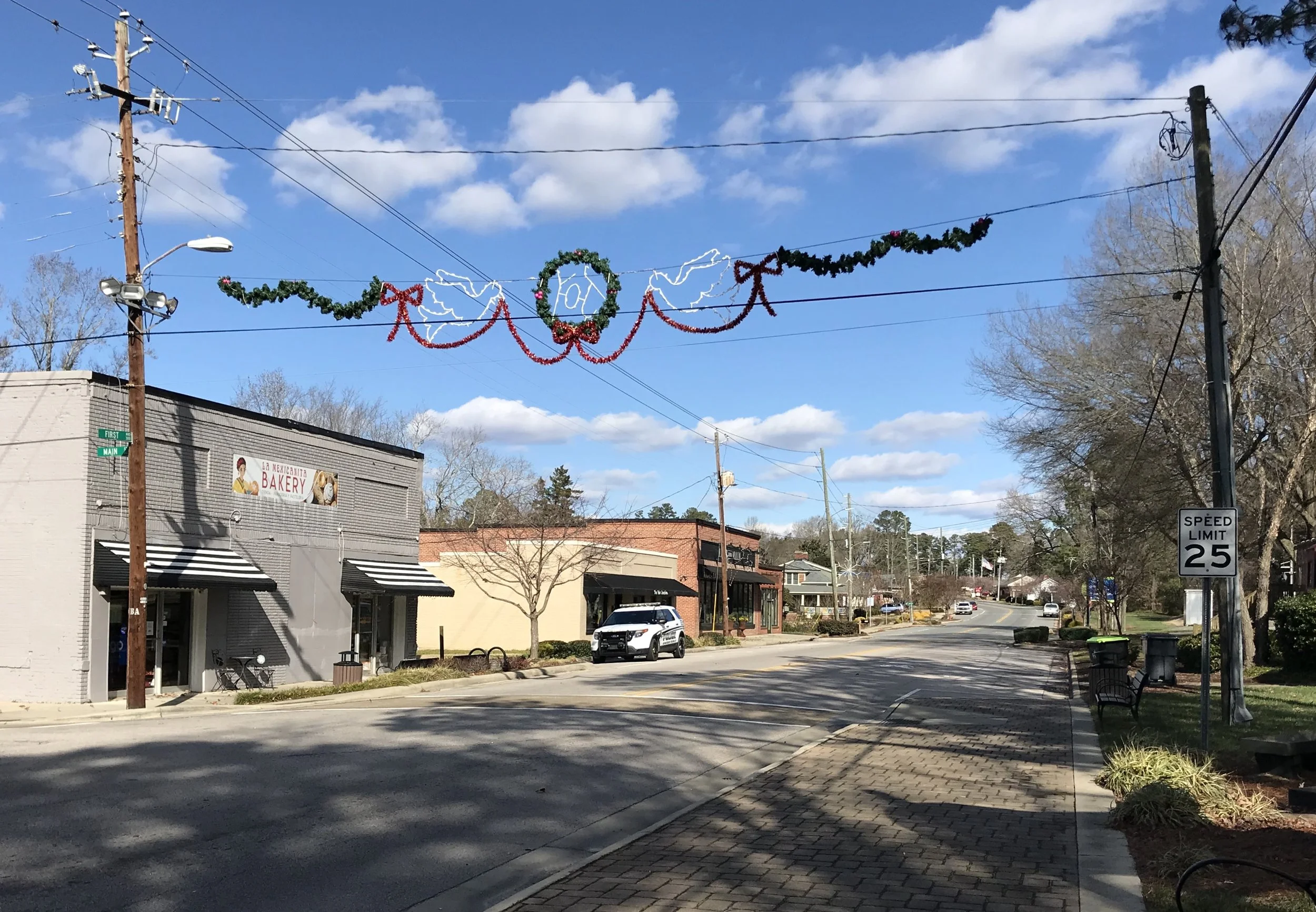
Estate Planning, Probate, and Business Planning Attorney Serving Knightdale, North Carolina
Protecting Knightdale Families Before the Unexpected Happens
You're heading west on Knightdale Boulevard toward 540 after dropping the kids off at school. Your phone rings. Your spouse's parent just passed away, and nobody knows if there's a will. Nobody knows where the documents are. And now your family is about to walk into the Wake County Estates Division at 316 Fayetteville Street in downtown Raleigh and try to figure out probate on their own.
I want to share with you what I've learned in more than 17 years of helping families throughout the great state of North Carolina with estate planning and probate. Knightdale is one of the fastest-growing communities in Wake County. The population has grown more than 220% since 2000, according to Census estimates. The median age here is in the mid-30s. Nearly one in four Knightdale residents is under 15 years old. And quite candidly, too many of these young families with children, with homes often valued in the mid- to high-$300,000s, have never put in writing what happens if both parents die.
This is not about being morbid. This is about having peace.
If we can be of assistance to you, please reach out to us at 919-647-9599 or visit our estate planning page to schedule a consultation.
Quick Answer for Knightdale Estate Planning Clients
If you live in Knightdale and need estate planning, probate help, or business succession planning, North Carolina law (N.C. Gen. Stat. Chapter 28A) governs how estates are administered. Probate is filed at the Wake County Clerk of Superior Court, Estates Division, at 316 Fayetteville Street, 12th Floor, Raleigh, NC 27601. With Knightdale homes often valued in the mid- to high-$300,000s, proper planning helps your family avoid months of court proceedings and thousands in unnecessary costs. We regularly handle estate planning and probate matters for Knightdale families throughout Wake County.
What Happens If You Die Without a Will in North Carolina?
Short Answer:
If you die without a will in North Carolina, state law decides who gets your property under N.C. Gen. Stat. Chapter 29. If you have a spouse and two or more children, your spouse receives only one-third of your real property and $60,000 plus one-third of personal property. Everything else goes to your children. The Wake County Clerk of Superior Court handles the administration at 316 Fayetteville Street in downtown Raleigh.
Here's the thing. Most Knightdale families don't realize how little their spouse actually receives under North Carolina's intestacy laws.
Let me walk you through what this looks like for a typical Knightdale family. You and your spouse own a home in Knightdale Station worth $425,000. You have two kids. You die without a will. Under N.C. Gen. Stat. Section 29-14, your spouse gets only one-third of that home. Not half. One-third. Your children get the other two-thirds, and if they're minors, the court has to appoint someone to manage their share.
And most of that money goes to costs that were completely avoidable.
North Carolina Intestacy Distribution (No Will):
| Family Situation | Spouse Receives | Children Receive |
|---|---|---|
| Spouse + 1 child | 1/2 real property, $60,000 + 1/2 net personal property | Remainder |
| Spouse + 2 or more children | 1/3 real property, $60,000 + 1/3 net personal property | Remainder split equally |
| Spouse + no children, parents survive | 1/2 real property, $100,000 + 1/2 net personal property | Nothing (parents inherit remainder) |
| Spouse + no children, no parents | All property | N/A |
In Knightdale, dying without a will means your family files intestate administration at the Wake County Clerk of Superior Court, Estates Division, at 316 Fayetteville Street, 12th Floor, Raleigh, NC 27601, paying an approximately $120 filing fee, typically by certified check or money order (cash may be accepted in person; always confirm current payment methods with the Clerk).
So let's talk about what you can do about it. A properly drafted will or trust-based estate plan puts you in control. You decide who gets what. You decide who raises your children. You decide how your assets are managed. Not a judge in downtown Raleigh who has never met your family.
How Does Probate Work in Wake County, North Carolina?
Short Answer:
Probate in Wake County is handled by the Clerk of Superior Court, Estates Division, at 316 Fayetteville Street, 12th Floor, Raleigh, NC 27601, phone (919) 792-4450. Under N.C. Gen. Stat. Chapter 28A, the Clerk admits wills and appoints personal representatives. Simple uncontested estates typically take 6 to 12 months. Contested matters transfer to Superior Court and can take 12 to 24 months or longer.
Let me be very clear with you about something. If you live in Knightdale, there is no probate office in town. Every filing goes through the Wake County Estates Division in downtown Raleigh, about 10 to 15 miles west on New Bern Avenue or via I-540 to I-440.
Here's where the costs really add up. The filing fee is approximately $120, typically paid by certified check or money order. Cash may be accepted in person, but mail-in payments require certified check or money order only. And quite candidly, the Estates Division staff cannot help you fill out any forms and cannot tell you which option you should choose when you open an estate. They have said this publicly on their scheduling page.
That's where we step in. We handle the filings, the court interactions, and the administration so your family doesn't have to drive to downtown Raleigh multiple times during what is already an incredibly difficult season.
What Knightdale Families Need for Probate Filing:
Original will (if one exists) for admission to the Wake County Clerk
Certified copy of death certificate
Approximately $120 filing fee by certified check or money order (cash may be accepted in person; confirm with the Clerk)
Completed AOC-E-202 Application for Letters (full probate) or AOC-E-203A/B for small estates
AOC-E-212 Estate Tax Certification (required for all estates)
Inventory of assets within 90 days of appointment as personal representative
In our experience, most Knightdale families are surprised by how long the process takes and how many trips to downtown Raleigh are involved. We frequently see cases where families started trying to handle probate on their own, realized the complexity, and reached out for help months into the process.
If you're facing probate and estate administration in Wake County, the earlier you bring in help, the smoother the process goes.
What Is the Small Estate Limit in North Carolina?
Short Answer:
North Carolina allows a simplified process called a small estate affidavit under N.C. Gen. Stat. Section 28A-25-1 when personal property is valued at $20,000 or less, or $30,000 if the surviving spouse is the sole heir. You must wait 30 days after the date of death before filing. Real property is not included in this calculation.
Here's what I want to strongly recommend you do if you think a small estate affidavit might apply. Look at the total value of personal property only. Not the house. Not real estate. Personal property means bank accounts, vehicles, personal belongings, and similar assets.
And honestly, many Knightdale families' estates exceed the $20,000 threshold because of the real property values here. Typical home values in Knightdale are in the mid- to high-$300,000s. If the deceased owned that home in their name alone without a trust, the family is looking at full probate administration in Wake County, not the simplified small estate process.
The math is pretty simple. A Knightdale home in the $350,000 to $400,000 range going through probate could cost the family $12,000 to $20,000 in attorney fees, court costs, and administrative expenses over 6 to 12 months, depending on the complexity of the estate. A revocable living trust can avoid probate for assets properly titled in the trust.
Let me be very clear with you about something. If you live in Knightdale, there is no probate office in town. Every filing goes through the Wake County Estates Division in downtown Raleigh, about 10 to 15 miles west on New Bern Avenue or via I-540 to I-440.
Here's where the costs really add up. The filing fee is approximately $120, typically paid by certified check or money order. Cash may be accepted in person, but mail-in payments require certified check or money order only. And quite candidly, the Estates Division staff cannot help you fill out any forms and cannot tell you which option you should choose when you open an estate. They have said this publicly on their scheduling page.
That's where we step in. We handle the filings, the court interactions, and the administration so your family doesn't have to drive to downtown Raleigh multiple times during what is already an incredibly difficult season.
What Knightdale Families Need for Probate Filing:
Original will (if one exists) for admission to the Wake County Clerk
Certified copy of death certificate
Approximately $120 filing fee by certified check or money order (cash may be accepted in person; confirm with the Clerk)
Completed AOC-E-202 Application for Letters (full probate) or AOC-E-203A/B for small estates
AOC-E-212 Estate Tax Certification (required for all estates)
Inventory of assets within 90 days of appointment as personal representative
In our experience, most Knightdale families are surprised by how long the process takes and how many trips to downtown Raleigh are involved. We frequently see cases where families started trying to handle probate on their own, realized the complexity, and reached out for help months into the process.
If you're facing probate and estate administrationin Wake County, the earlier you bring in help, the smoother the process goes.Short Answer:
Estate Planning for Young Families in Knightdale, North Carolina
Short Answer:
Knightdale's median age is in the mid-30s, with nearly one in four residents under 15. Young families in Knightdale need kids protection planning that includes legal guardianship designations, trusts for minor children, powers of attorney, and advance directives. Without a written guardianship designation, the Wake County court decides who raises your children if both parents die or become incapacitated.
I want to be very clear with you about something. If you are a parent in Knightdale and you have not named a legal guardian for your children in writing, you are leaving the most important decision of your family's life up to a judge who has never met you.
You may be thinking that your family already knows who would take care of the kids. And honestly, that may be true. But the court doesn't know. CPS workers are doing their job, and they're often doing it under incredibly difficult circumstances. But their job in that moment isn't to fulfill your wishes. Their job is to place your children in a safe environment until the court can sort things out.
These are parents who spend countless hours planning birthday parties at Knightdale Station Park, organizing soccer schedules, and researching the right schools. But they have never put in writing what happens if both parents die on the way home from date night on I-540.
What Young Knightdale Families Need:
Legal guardianship designation naming who raises your children (and backup guardians)
Revocable living trust to manage assets for your children until they're old enough to manage them responsibly
Financial power of attorney (N.C. Gen. Stat. Chapter 32A) so someone can handle your finances if you're incapacitated
Health care power of attorney naming who makes medical decisions for you
Advance directive / living will (N.C. Gen. Stat. Section 90-321) stating your end-of-life wishes
Beneficiary designation review on all life insurance and retirement accounts
Don't leave your children's future up to chance. If we can be of assistance to you, reach out to us at 919-647-9599
How Can Knightdale Families Avoid Probate in North Carolina?
Short Answer:
Knightdale families can avoid probate through several strategies under North Carolina law, including revocable living trusts (N.C. Gen. Stat. Chapter 36C), joint ownership with right of survivorship, beneficiary designations on accounts, and payable-on-death designations. A trust-based plan transfers assets outside of Wake County probate court entirely. We regularly help Knightdale families create plans that keep their homes and assets out of probate.
So let's talk about the options. Not every family needs a trust. But if you own a home in Knightdale, you should seriously consider one.
Probate Avoidance Strategies for Knightdale Families: Here's the thing. A will alone does not avoid probate. I want to share that with you because it's a common misconception. A will tells the Wake County Clerk of Superior Court what you want to happen, but the court still has to approve it, administer the estate, and oversee the distribution. That process takes months and costs thousands.
| Strategy | What It Covers | Avoids Probate? | Best For |
|---|---|---|---|
| Revocable Living Trust | Real property, investments, business interests | Yes, completely | Homeowners, business owners, families with children |
| Joint Tenancy with Survivorship | Real property, bank accounts | Yes, for jointly held assets | Married couples (limited protection) |
| Beneficiary Designations | Life insurance, retirement accounts, POD accounts | Yes, for designated accounts | All families (supplement to other planning) |
| Transfer on Death Deed | Real property only | Yes, for that property | Simple situations, single property |
| Will Only (No Trust) | All assets | No, goes through probate | Smaller estates, renters without significant assets |
A trust-based estate plan transfers your assets to a trust during your lifetime. When you pass away, your successor trustee distributes everything according to your instructions. No court filing at 316 Fayetteville Street. No approximately $120 filing fee. No 6 to 12 months of administration.
The difference is stark.
Do Knightdale Business Owners Need Business Succession Planning?
Short Answer:
If you own a business in Knightdale, your estate plan and your business plan need to work together. North Carolina business entities are formed through the NC Secretary of State under N.C. Gen. Stat. Chapter 57D (LLCs) or Chapter 55 (corporations). Without business succession planning, your company could effectively die with you.
Knightdale's commercial corridor along Knightdale Boulevard is growing rapidly. The Downtown North project is bringing hundreds of thousands of square feet of new retail and commercial space. The Knightdale Commerce Alliance is supporting new businesses opening every month. We frequently see business owners who have invested everything into building their companies but have never created a plan for what happens if they can't run it anymore.
Here's what business succession planning looks like:
Operating agreement review to ensure your LLC or partnership agreement includes succession provisions
Buy-sell agreement that funds business transition through life insurance or structured payments
Entity structure review to protect business assets from personal liability
Integration with estate plan so your business interests transfer smoothly to your family or business partners
Key person planning for businesses that depend on the owner's involvement
In our experience, the business owners along Knightdale Boulevard and throughout Wake County who have the smoothest transitions are the ones who planned years in advance. We help Knightdale business owners create plans that protect their companies, their employees, and the people they love.
Why Knightdale Families Choose The Walls Law Group
Our Experience Serving Knightdale and Wake County:
Jason Walls, JD, has been helping North Carolina families and business owners with estate planning, probate, and business succession since founding The Walls Law Group in 2009. Our team includes attorneys with focused experience in estate planning, probate and estate administration, trust administration, asset protection, business planning, kids protection planning, and guardianship.
We understand Wake County's court procedures because we regularly handle estate and probate matters at the Wake County Clerk of Superior Court at 316 Fayetteville Street. We know that the Estates Division is busy, that appointments can take weeks to schedule, and that their staff cannot provide legal advice or help fill out forms. We handle all of that for you.
Our office at 5511 Capital Center Drive in Raleigh is approximately 20 to 25 minutes from Knightdale via I-540. We serve families throughout the great state of North Carolina, including Knightdale, Raleigh, Cary, Durham, Chapel Hill, Wake Forest, Apex, Morrisville, Holly Springs, and Fuquay-Varina.
Our team includes:
Jason Walls, JD (Campbell University School of Law, NC State University, WealthCounsel member, NC Bar Association, adjunct professor at Campbell Law)
Robert L. Bartilucci, JD, LLM, CFP (estate planning, business planning)
Ruth M. Allen (probate, guardianship, surplus funds)
S. Madison "Maddi" Moore (estate planning, estate administration, business planning)
What to Do in the First 24 Hours After a Loved One Passes Away in Knightdale
If someone you love has passed away and you're a Knightdale resident, here's what you need to know right now:
Locate the original will and any trust documents. If there's a trust, contact the successor trustee immediately.
Secure the property. If the deceased lived alone, make sure the home is locked and mail is collected.
Obtain certified copies of the death certificate. You'll need multiple copies for the Wake County Clerk, financial institutions, and insurance companies.
Do not distribute any assets until a personal representative is appointed by the Wake County Clerk of Superior Court.
Contact an estate planning attorney. The Wake County Estates Division at (919) 792-4450 cannot give you legal advice. Let us walk you through the process.

What NOT to Do When Settling an Estate in Wake County
Don't try to transfer property without going through the proper legal channels. The Wake County Register of Deeds at 300 S. Salisbury Street, Suite 1700, Raleigh, requires properly executed documents.
Don't assume you can skip probate just because the family agrees. Unless assets are in a trust or have beneficiary designations, probate is required.
Don't pay the deceased person's debts from your own money. That's the estate's responsibility.
Don't throw away any financial documents. The personal representative must file an inventory within 90 days.
Knightdale vs. Other Wake County Communities: Estate Planning Considerations
| Factor | Knightdale | Raleigh | Cary |
|---|---|---|---|
| Median Age | ~35 | ~34.5 | ~40 |
| Population Under 15 | ~23.5% | ~18% | ~20% |
| Typical Home Value | Mid- to high-$300,000s | $400,000+ | $475,000+ |
| Growth Rate Since 2010 | ~70% | ~25% | ~30% |
| Primary Estate Planning Need | Young family guardianship, probate avoidance | Mixed (all ages) | Retirement and wealth transfer |
| Probate Court | Wake County Clerk (same for all) | Wake County Clerk | Wake County Clerk |
All three communities file probate at the same Wake County courthouse. But Knightdale's younger demographics and explosive growth mean the most urgent need is kids protection planning and young family estate planning, not the retirement-focused planning that may be primary in more established communities.
Legal Threshold Statements
"In North Carolina, most probate estates are administered under N.C. Gen. Stat. Chapter 28A, with filings made at the county Clerk of Superior Court."
"North Carolina's small estate affidavit threshold is $20,000 in personal property, or $30,000 if the surviving spouse is the sole heir, with a mandatory 30-day waiting period (N.C. Gen. Stat. Section 28A-25-1)."
"Under North Carolina's intestacy law (N.C. Gen. Stat. Section 29-14), a surviving spouse with two or more children receives only one-third of the deceased spouse's real property.

-
If you die without a will in North Carolina, your property is distributed according to N.C. Gen. Stat. Chapter 29 intestacy law. Your spouse does not automatically receive everything. If you have two or more children, your spouse gets only one-third of real property and $60,000 plus one-third of personal property. The Wake County Clerk of Superior Court handles the administration.
-
Probate in Wake County is filed at the Clerk of Superior Court, Estates Division, 316 Fayetteville Street, 12th Floor, Raleigh, NC 27601. The Clerk admits wills, appoints personal representatives, and oversees estate administration under N.C. Gen. Stat. Chapter 28A. Simple estates typically take 6 to 12 months. The filing fee is approximately $120, paid by certified check or money order (cash may be accepted in person).
-
In Wake County, simple uncontested probate estates typically take 6 to 12 months from filing to closing. Contested estates or those involving business interests, multiple properties, or blended families can take 12 to 24 months or longer. The personal representative must file an asset inventory within 90 days, and creditors have approximately 3 months to file claims after public notice.
-
North Carolina's small estate affidavit under N.C. Gen. Stat. Section 28A-25-1 applies when personal property is valued at $20,000 or less, or $30,000 if the surviving spouse is sole heir. A 30-day waiting period after death is required. Real property is excluded from this calculation. Many Knightdale estates exceed this threshold given typical home values in the mid- to high-$300,000s.
-
If you own a home in Knightdale or anywhere in North Carolina, a revocable living trust under N.C. Gen. Stat. Chapter 36C can help your family avoid probate entirely. Without a trust, your home goes through Wake County probate at 316 Fayetteville Street, costing your family months and potentially thousands of dollars. We regularly help Knightdale families determine whether a trust-based plan is right for their situation.
-
You can avoid probate in North Carolina through revocable living trusts, joint ownership with right of survivorship, beneficiary designations, and payable-on-death accounts. A trust-based plan moves your assets outside the Wake County probate process entirely. Deeds transferring your home into the trust are recorded at the Wake County Register of Deeds at 300 S. Salisbury Street, Suite 1700, Raleigh, and your successor trustee handles distribution privately.
-
Yes. If you moved to Knightdale from another state, your existing estate plan may not comply with North Carolina law. Powers of attorney, advance directives, and trust provisions vary by state. North Carolina has specific requirements under N.C. Gen. Stat. Chapter 31 for valid wills and under Chapter 32A for powers of attorney. We recommend having your plan reviewed by a North Carolina attorney.
Frequently Asked Questions About Knightdale Estate Planning
Answers by Jason Walls, JD, who has helped families throughout the Triangle area with estate planning and probate since 2009.
Let Us Help You Protect Your Knightdale Family
Your family deserves a plan that actually works. And honestly, you deserve the peace of mind that comes from knowing you've done everything possible to protect the people you love.
If we can be of assistance to you, please reach out to us at 919-647-9599 or schedule a consultation. We would be happy to discuss your family's specific situation and walk you through the entire process.
The Walls Law Group, 5511 Capital Center Drive, Raleigh, NC, Serving Knightdale, Raleigh, Cary, Durham, and families throughout the great state of North Carolina

Legal Disclaimer: This page provides general information about estate planning, probate, and business planning law in Knightdale and North Carolina. It is not legal advice. Every family's situation is different and results depend on unique facts and circumstances. Reading this information does not create an attorney-client relationship with The Walls Law Group. For specific advice about your situation, contact a licensed North Carolina attorney. Past results do not guarantee a similar outcome.